Showing posts with label ugly. Show all posts

Thursday, 22 July 2010

London Barbican, "one of the wonders of the modern world" according to the Queen

 The Barbican Centre, topped a poll for London's most ugliest building according to a report on the BBC website:

http://news.bbc.co.uk/1/hi/england/london/3126946.stm

When Her Majesty opened the building in 1982 she declared it one of the wonders of the modern world - indeed. Perhaps this explains why Prince Charles is so against Modern architecture, it's just an age old case of rebelling against one's parents.

The top ten list was as follows:

1. Barbican Centre
2. BT Communications Tower
3. Millennium Dome
4. Centre Point Tower
5. Elephant and Castle Shopping
6. Euston Station
7. Royal Free Hospital
8. M16 Building
9. St. Georges Wharf
10. Postal Sorting Office, Rathbone Place, W1

Wednesday, 14 July 2010

IMAX in Bournemouth demolished because it is too ugly

http://www.guardian.co.uk/artanddesign/2010/jan/20/bournemouth-imax-building-demolition

http://www.boston.com/ae/theater_arts/articles/2010/02/21/truly_ugly_buildings_offend_the_community_as_well_as_the_senses/

Is this really the best way to determine the outcome of our built environment?
On one hand it is democratic; if you consider a TV audience pressing their red buttons to be democratic. There may be worse contenders in smaller towns who could only muster a few votes. It doesn't make their case any less significant. The demolition of any building is not to be taken lightly. What is considered a good idea by one generation is seen as legalised vandalism by the next. A good example of this would be the Euston arch. A lesser known example is one stretch of Abercromby Square, Liverpool demolished to make way for a bland pile making reference to the Georgian architecture it replaced....
Betjeman described Abercromby square as being like a small town within a larger one. If that is the case a quarter of it was demolished by the University of Liverpool to make way for what was called, Senate House (now the Abercromby wing of the Sydney Jones Library).
Of course, the Imax in Bournemouth was unlikely to become a significant work of architecture but we must surely not resort to mob rule in these matters.

Wednesday, 16 June 2010

Le Corbusier, Chandigarh, Sector-17

“M. Le Corbusier has enthusiasm and a remarkable faculty for begging the question, and whatever the value of his writings I find his buildings simply unintelligible in their purpose and wholly unpleasant to look at”[1].


[1] Blomfield, R. (1934). Modernismus. London, Macmillan and Co., p57

Monday, 10 May 2010

Ugly Architecture on Flickr


Well I never, a group on Flickr devoted to my favorite topic!

http://www.flickr.com/groups/ugly_architecture/

There are some real gems here such as Boston City Hall: (photo by joe shlabotnik)


There are others that are photographed in a too 'arty' manner. If it is an ugly building don't try to make it look better through choreographed photography.

Ugly buildings can still make great architecture

The incomplete, unfinished, and unkempt can still make good architecture. An unresolved ambiguous composition [i.e. post-structuralist] is often more satisfying than the finished and complete [i.e. structuralist]

Perhaps as we engage with the 'death of the author', and begin to acknowledge the presence of the 'reader' we create space for 'un-complete' and fragmented solutions.

http://www.lewism.org/2006/10/09/when-do-ugly-buildings-make-great-architecture/

Sunday, 9 May 2010

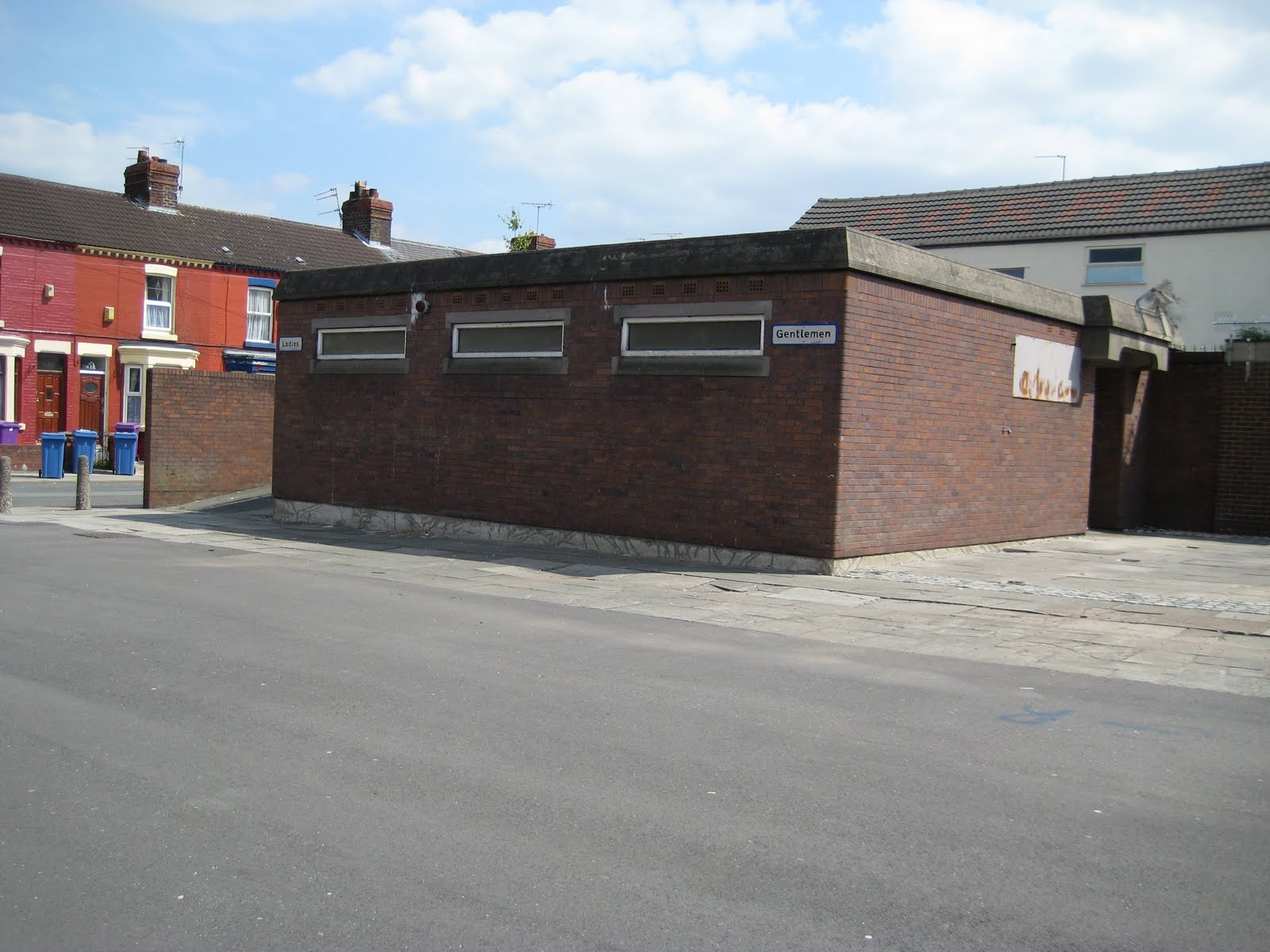
Spending a Penny: The Humble Public Convenience


Unlike the current trend for prefabricated WC's that we find in our city centres of late, previous versions were far more substantial and determined.
Here we see a squat brick structure with high level openings and flat roof.
The structure is split into two rooms; one for male customers, the other for female.
Although now synonymous with the popular trend for 'cottaging', they represent a caring civic attitude and concern for the welfare of visitors to the city.
Whilst there is a stark functionalist aesthetic to the structure, other functions such as hygiene, beauty and safety are sadly neglected. There is a meanness to the architecture, its defensive form and materials attempting to withstand abuse and vandalism.

Sunday, 3 January 2010

Ruins

Abandoned buildings, dilapidated structures: they are signs of previous human occupation.

The ruins below are not ugly though. They are the clean white bones; not the decaying carcass that we find repulsive, the abandoned building occupied by pigeons.

At what point is the delapidation complete and the status of ruin achieved. At what point does romanticism take over from the sadness of waste and neglect? Perhaps it is the tenacity of the ruin that intrigues us. Its defiance to resist complete demolition and to remain more seemingly permanent than an occupied useable and 'functional' structure. The ruin played such an important part in the Western Renaissance. We returned to Rome, Greece and Turkey to measure such things as tools for estalbishing our future course. Could they be in-grained as a collective memory. The ruined Bank of England more certain as a ruin that Soane's incomplete version.

Saturday, 2 January 2010

Cabients of Curiosities


We have a special relationships with things, objects, stuff, art, belongings and collections. We are what we own and we form a 'collective' identity through our national collections.
Cabinets of Curiosities have contained the unusual, the peculiar and the grotesque [i.e the ugly], as well as the unique, precious, rare and splendid (the sublime), and in that sense they form the perfect studies, as they illustrate our fascination with the ugly as well as our marveling at the beautiful.
The desire to own 'one of everything'....

My own foray into this dark and dirty domain has been through taxidermy.
A connection with death and yet the preservation of the illusion of life.
Image: Stoat Trophy mounted on rectangular timber shield.

Taxidermy: Whilst taxidermy may not be popular mass culture, it has seen something of a revival in recent years, especially in Modern Art [possibly stemming from Hurst's works].
To some taxidermy is a morbid creation symbolic of hunting, imperialism and cruelty, and in the past this may have been partially true, but it has always been more than that.
It has also featured in some poorly executed museum displays and equally is still found in some delightful curatorial feats [as found in the Manchester Museum, New Yorks Natural History Museum and the Pitt Rivers Museum]. What better way of learning about an animal than actually seeing it {- yes, of course there is no substitute for seeing an animal 'in the wild' etc etc. }

Taxidermy is one of those topics that spans established genres. It is both a science and an art form. It is concerned with our natural surroundings, the beauty of creation, and also with fiction and narrative. Each taxiderm tells a story and sets a scene. It enables us to become un-naturally close to animals that would otherwise be out of reach. It possibly reminds us of death, but for me it is the marvel of looking at a wild animal, preserved and removed from passing time, seasons and the cycle of life.
Many people are scared when they first encounter a taxidermy specimen. Perhaps this relates to an inner ancient mode of self-preservation. We still feel fear when we see a lion form, regardless of whether it is alive or taxidermed.